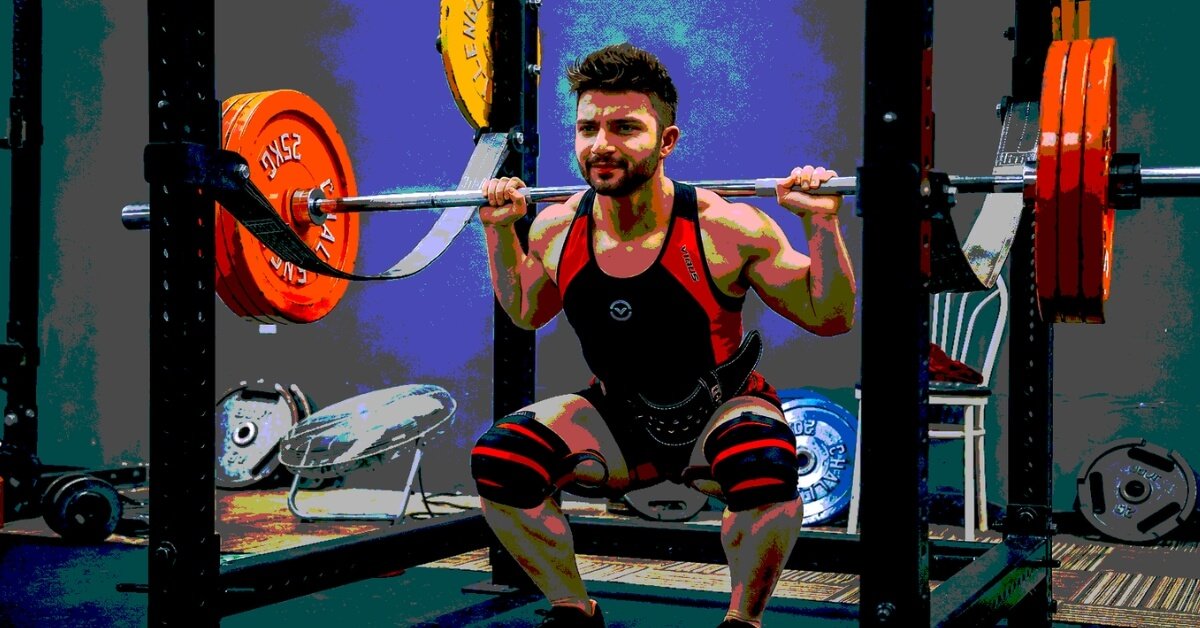
The bar had 60 kg on it, and I was staring at it the way you stare at that one relative who asks, “When are you getting married?” at every single family function.
Three weeks earlier, I could barely squat the empty bar without my knees shaking. Now here I was, loading plate after plate, feeling like a bodybuilder again.
Strangely, I did what everyone does when they think they haven’t really lost their strength.
I skipped two steps in my program and jumped straight to a weight I had no business touching after such a long break.
I got under the bar. I messed up my form on rep 2. By rep 4, my spine rounded like a question mark, and a guy at the gym had to help me out before I folded in half.
I sat on the gym floor for a good 5 minutes, disappointed, because it had shattered my ego.
That same afternoon, still sore and a little humiliated, I opened my trading terminal and did the same thing.
I had already closed 3 winning trades in a row. I felt sharp, like I had finally cracked the code.
So on the 4th trade, I sized up. Way up. I did that just because I felt good and wanted to feel unstoppable.
That trade wiped out the gains from the previous three, plus a chunk more from my trading account.
It was the same day, same mistake, but two completely different rooms.
That’s when it hit me.
I had been treating my training program and my trading account as if they ran on different rules. They don’t.
They run on the same one, and I had been breaking it in both places without even noticing.
The Rule Nobody Tells You Loud Enough
The idea of progressive overload is simple. To grow and get stronger, you strive to do better than your previous workouts.
You increase reps, or add a small amount of weight, enough for your body to adapt, never so much that it breaks you.
2.5 kg more this week. Maybe 5 kg more the next week. You don’t jump from 50 to 100 because you had a fantastic week.
The body doesn’t care how motivated you feel. It only responds to how well it recovered.
Position sizing works on the same logic.
Your trading account can only take so much risk before a losing streak turns from a bruise into a fracture.
Your position size should grow like your training weights: slowly and based on evidence. Size up based on what your account can actually handle, not on how invincible you feel that day.
I had it backwards for years. I sized my trades based on my mood and emotions, not my approach.
Calorie Deficit and Risk Management: The One Rule
Confidence Is Not a Program
This is the part that actually stung me when I sat with it.
In the gym, I never trusted my confidence alone. I trusted the program.
Even on days I felt like Hercules, I stuck to the numbers written down, because I knew the plan was smarter than my mood. It doesn’t act or change based on emotions.
And on days I felt weak, the program still told me what to lift, because it didn’t care how I felt either. It only cared about the pattern of progress over weeks and months.
What most people don’t realise is that the program alone wasn’t doing all the work.
My protocol was quietly doing half the job in the background. Eating enough, recovering properly, not showing up half-fed and calling it discipline.
The lifts only got heavier because the meals at home were sorted first. Nobody sees that part. Everyone only sees the numbers on the bar going up.
In trading, I threw all of that straight out the window. I let my confidence decide the position size in real time.
Three wins in a row didn’t mean my edge got stronger. It just meant three trades worked well at that time.
But my mind, high on dopamine, translated that into “you’re invincible now, size up and print more profits”.
That’s the same trap as loading 60 kg because 40 kg felt easy for a week.
The gym taught me that strength is earned in small, boring increments. My trading account taught me that expensive lesson the hard way, in a single afternoon.
The Boring Truth About Growth
There is a reason every serious lifter eventually falls in love with boring, incremental progress.
It is not exciting to add two and a half kilos a week or a month. It does not feel like a movie montage. But it is the only method that lets you keep showing up 5 years later, still lifting, still improving, without a torn muscle or an injury.
Trading is no different.
The traders who last are not the ones who nail one big position and retire at 25. That story exists, but it’s rare. What usually follows is a second story nobody tells, about the accounts that got wiped out trying to repeat it.
The traders who last size up the way a smart lifter adds weight. Slowly, with rules, with a plan that doesn’t change just because last week felt good.
I still think about that bar sometimes. 60 kg, sitting there, daring me to skip the process. I didn’t need more weight that day. After years off, I needed more patience.
My account needed the same thing, and it took a real loss for me to actually listen.
What I Do Differently Now
These days, my position size does not move because I feel confident.
It moves because my track record over the last twenty or thirty trades earns it. The same way my squat number only moves because my body has proven, rep after rep, that it can handle more.
I stopped asking “how do I feel about this trade” and started asking “what has my last month of data earned me”.
That single shift did more for my account than any strategy tweak ever did.
Progressive overload is not really about the gym. It is about respecting the gap between how strong you feel and how strong you actually are.
The bar does not lie. Neither does your trading curve.
The only question is whether you are patient enough to let both grow the slow way, the way that actually lasts.
No ego lifting. No emotional trading. Just a system that lets you avoid both, so you stop making mood-based decisions.
➡️📓 That’s exactly why I created a free guide for you: 21 Golden Rules of Fat Loss 2.0
The mind you bring to the charts is the same mind you bring to the plate.